
Tips for a comfortable, resilient back
|

|
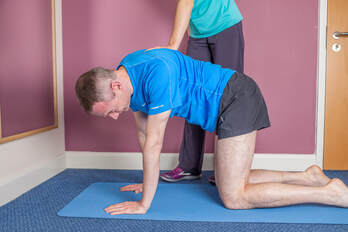
- Pace yourself. Build up to heavy activity (gardening/sport and exercise/manual work). Have regular breaks and give yourself sufficient recovery time.
- If you feel your back is tightening or you recognise a familiar back pain coming on, sit down and relax, take 10-20 good deep breaths, stretch gently or go for a walk – whatever feels most beneficial at that time.
- Move regularly through the day. If in an office or car, find ways to walk around. E.g. park at far end of car park and walk to office, loo break, make tea etc, stop off on long car journeys and stretch and walk a little.
|
|
- Walking is a great preventative and rehabilitative exercise. Walk swinging your arms, without a bag or using a phone as you walk. By swinging your arms, you rotate your torso and this eases the load on your lower back. Walking also gently mobilises your entire spine, stretching it and strengthening it with each step. Do not underestimate the power of a regular, 20-30 minute arm-swinging, long-striding walk.
- Ladies – choose flats when you can, and shoes that allow your toes to spread out and be used fully. This will ensure that your back is in a comfortable, ergonomic position for movement.
- If you have to carry a bag, choose a cross-body back or rucksack. Don’t carry the kitchen sink, just what you need.
- Find someone you trust who can help you if you feel your back is getting sore to an extent that you can’t manage it yourself.
|
What to do if your back gets sore:
|
|
- The best thing to do in this situation is to take things easy for a while, avoid lifting, heavy manual work and intense activity, but keep moving. If you can, walk gently then stride out progressively when you walk, swinging the arms. Gentle movement and relaxed breathing signal to your nervous system that the body is not under attack, and that it can relax the muscle spasms as your spinal cord is safe.
- Do not be frightened to move, unless in complete agony. If you are in agony, find a comfortable position, relax, and breathe deeply 10-20 breaths every now and again, to signal to your nervous system that everything is ok. Then, as pain eases, move around gently and take some gentle walks as soon as it’s comfortable.
- If you are really concerned about the level of pain, have a lot of leg pain, pins and needles, or other extreme symptoms, contact your GP.